Museum of Love
Collaboration | Digital Museum | Interactive | Walkthrough
The Indian Queer Project is a nonprofit that works towards archiving the oral history of Indian queer youth. It is an exclusively queer project working to not only amplify their voice but to bring solidarity amongst those who are struggling with their gender and sexuality identities to find camaraderie and solidarity from those within the community by sharing their story and by creating resources that support their intersectional identity of being Indian and queer.
​
Museum of Love tries to address negative notions about the queer community by using love and compassion as tools to question their opinions. The intention is also to show that a happy queer life is possible to those who can't see the future with it.
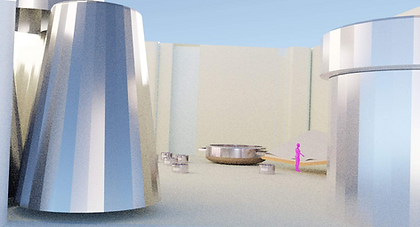
Design and execute an online interactive museum which showcases the timeline of achievements made by the Indian queer community in terms of legal, social and personal battles. It will also question the rigidity of gender and sexuality through various exhibits and shows how the idea of gender can exist in the future. The intent of this museum is to preserve Indian queer history and provoke visitors to rethink the rigid binary systems of gender, gender role and sexualities.
Primary Research


-
they can “turn you gay/trans/queer”
-
I was not taught about the queer community
-
Not natural , not taught, considered wrong
-
Considered natural but made fun of
-
That its against ones religion
-
Ridicule and fear of the ‘hijra’ population. Homosexuality and sodomy/pedophilia considered synonymous. Jokes about closeted homosexual men/boys
Secondary Research


A project by Tinder and Gaysi Family that seeks to collect the many moods, experiences, and complexities of queer dating


Digital Queer Anthology of Northeast India
-
Most of the people want acceptance of queer identities and want gender to be more fluid and not just constrained by the binary.
-
‘Same-Sex love in India’ and ‘Queer Sexuality: A Cultural Narrative of India’s Historical Archive’ gives insights to how queer identities were perceived in Ramayana, Mahabharata, by the Mughal empire, Hindu texts and in pre-colonial Indian Subcontinent.
-
However, the experience of queer people today is different. Homophobia and transphobia is very much prevalent in the country.
-
A lot of the queer people have to go through conversion therapy, disowned by family and/or friends, forced into marriage and in extreme cases, correctional rape is used and even murdered. This is justified by believing in opinions like, this is unnatural, the religion says so, what will people think, not acceptable in our culture or simply ignorance and unwillingness to learn.
Therefore, the insights led to redefining of the brief and more research about love, religion and queer narratives through primary and secondary research.

Content Mapping

Narrative Matrix
To build an online museum that uses love and compassion as tools to tackle hatred and ignorance towards the queer community, find ways in which society can be more inclusive of different gender identities and show that positive queer lives are possible.
What is Love?

Trying to find the meaning of love in a fantasy forest.


This is about taking risk in love. Hence then hot air balloon. Inspired by the quote, “love is being willing to ruin your own painting for the chance of great one” - Ellie Chu from the film, The Half of it

Inspired by the same quote. Its a bit too literal, actually ruining a painting for a chance of having a great one. Its asking how bold are you?
Religion and Love

An open and quite space where people can listen to what religions say about love. Audio will echo like how it does in a religious space.

These candles are representing different religions and the flames are integrating. Its asking, when all the religions asks us to be compassionate then why cant we be more accepting?

These swirls are representing spirits, asking how can we hate when all of our spirit is the same?
Dismantling Gender Binary


These boxes are showing binary numbers and as it progresses. It goes out of the box and evolve into something natural and beautiful.

Urging people to break the binary. Right now we are living in a prison which keeps us from exploring our identity and expression. This is what we have to break
To make a daal delicious, we put all kind of different masala to get its full flavour, just like that, we must mix and match different languages to get a more inclusive language and
further, a more understanding and accepting society.
Positive Queer Stories


Showing a happy queer life in the form of this kind of cut outs. Trying to covey that it will be remembered by history.

Making a home made tent which gives the feeling of warmth and safety. Stories can be heard in the form of audio
Showing positive queer stories through newspapers, radios, TVs, conveying that happy queer life exists and give hope to younger queer people who
might be questioning their lives.
The concepts were selected through discussions with the person in charge from the NGO. The decisions were made based on how provocative and layered the message is.
What is Love?


This is about taking risk in love. Hence then hot air balloon. Inspired by the quote, “ love is being willing to ruin your own painting for the chance of great one” - Ellie Chu from the film, The Half of it
Religion and Love


An open and quite space where people can listen to what religions say about love. Audio will echo like how it does in a religious space.
Dismantling Gender Binary


To make a daal delicious, we put all kind of different masala to get its full flavor, just like that, we must mix and match different languages to get a more inclusive language and further, a more understanding and accepting society.
Positive Queer Stories


Showing positive queer stories through newspapers, radios, TVs, conveying that happy queer life exists and give hope to younger queer people who might be questioning their lives.


Testing and feedback
“Maybe there could be depiction of more kind of love and not just queer love. The way language is used in the kitchen exhibit is really interesting”
“The circles in the start of the museums could have been bigger. While approaching the video, there was a sense of curiosity because I could see it from far and wanted to know what it was about. I think the museum is trying to say that there should be equality in society with more focus towards the transgender community. Overall, I really liked the museum”.
“I loved the concept that you provided with not just museum of love being human love but also language. That's something i actually found interesting. The narrative was clear. The photographs at the starting of the museum is really nice”


Observations
-
Navigation in the museum was tricky for some visitors. They needed some help with that.​
-
Some visitors were expecting to see more intersectionality within the community, like how would caste, class, religion would play a role.​
-
Visitors found the initial render of the museum to be dark and hence it was not conveying the feeling of love. Later it was re designed.​
-
Some visitors could not see the colours properly on their laptops due to difference in quality of the screen.
India still has a long way to go in terms of LGBT+ rights, sensitivity, understanding and acceptance in society. Museum of Love is a reminder to queer people that they are not alone, in a world where heteronormativity is the default. It is also a response to ignorance, homophobia and transphobia. An empathic approach is taken because people are more likely to listen and have an open mind when they are confronted with compassion and kindness and not attacked for their preconceived notions about the queer community. Designing a museum seemed to be the most appropriate choice, since being in a narrative environment has a more lasting impact on visitors where they can interact with their surroundings.
-
The museum was not tested by the people who have negative opinions about the queer community. Hence it is not sure how effective it will be.
-
Since most of the exhibits communicate with the English language, it may not be accessible to people who can't understand English.​
-
It is a digital museum so it may not be difficult for people who don't have access to wifi and a computer.
-
The museum can be looked at from “Survival of the Friendliest” perspective by anthropologist Brian Hare and writer Vanessa Woods. They stress upon the idea of “the ability to recognize strangers as group members”.
-
The museum can explore the intersectionality of various identities and how it affects a queer person’s life.
-
Since it is a digital museum, it has the potential to connect people globally and build a sense of community.
-
The museum can include more regional language.
-
The museum can include the experiences of the Hijra community.
-
There is a potential for the museum to be explored in virtual and augmented reality to make the experience more immersive.
-
The museum can explore the double standards within the queer community on the basis of misogyny, sexism, transphobia, biphobia, casteism, classism and xenophobia.
-
There is a potential to research on the AIDS crisis and its impact in the Indian queer community.
See other projects